
GUIDE
The Investors Stairway:
Stages of startup funding explained
The investors' stairway, often referred to as the Venture Capital (VC) or Funding Stairway, is a model that illustrates the typical progression of a startup's fundraising journey from inception to maturity.
For entrepreneurs, understanding this model is crucial for successful fundraising, strategic planning, and effective equity management.

Understanding Venture Capital Investments
Venture Capital (VC) is a type of private equity capital provided by VCfirms or funds to startups with high growth potential.
How it Works: VCs invest in exchange for an equity stake (ownership percentage) in your company. They are looking for a high Return on Investment (ROI), often aiming for a significant multiple (5x, 10x, or more) of their initial investment, typically realised when the company is acquired or goes public (IPO).
Investor Perspective: Risk is paramount. Early stages are high-risk/high reward. As the company grows and proves its model, the risk decreases, and the valuation increases. Investors require clear milestones to justify the next investment, ensuring their money fuels tangible growth.
Stages of Development, Investment, and Dilution
The following table summarizes the typical stages, focusing on the investor's view of risk, investment value, and the resulting dilution for the entrepreneur.
Understanding Dilution and Value
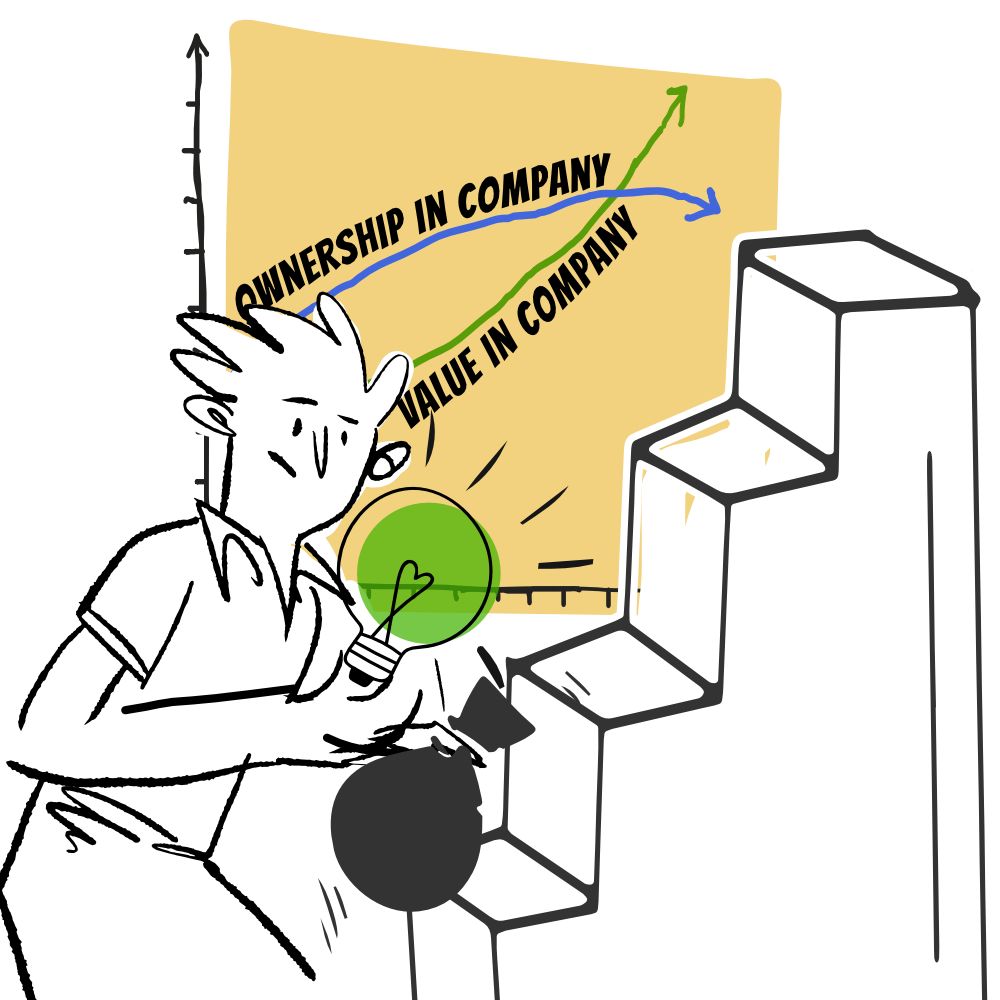
The Entrepreneur's Dilemma (and Solution):
Investor Perspective: Risk is paramount. Early stages are high-risk/high reward. As the company grows and proves its model, the risk decreases, and the valuation increases. Investors require clear milestones to justify the next investment, ensuring their money fuels tangible growth.
Your Value Increases:
As external investments validate your business, your entrepreneurial value (the value of your equity, though a smaller percentage) increases significantly. The founders' equity stake may shrink from 100% to 15-25% by the time of the IPO. Still, the monetary value of that remaining percentage is exponentially higher due to the massive increase in the company's valuation.
Dividing the Growth Journey and Milestones
The path from idea to IPO isn't one big leap: it's a series of focused, short-term growth journeys divided by milestones.
Milestone Definition: Each investment fund stage describes specific achievable milestones (e.g., "build a product with 1,000 paying users," "expand sales to three new cities," or "achieve $\$1M$ in recurring revenue").
Funding Strategy: Entrepreneurs should raise only enough money in each round to achieve the next significant milestone, plus a 6–12-month runway. Successfully hitting these milestones is what drives the higher valuation in the next investment round, thereby minimising unnecessary dilution.
Investors Stairway Summary
Empowering advice for entrepreneurs on the business and investment journey
Raising capital is more than securing funds; it's about building momentum, proving your potential, and unlocking the next level of growth.
Think of each funding round as a step on your stairway to success, where every milestone you reach brings you closer to your dream. Don’t fear dilution—embrace it as the fuel that powers your journey. A smaller slice of a thriving, high-value company is far more rewarding than owning all of something that never scales. Focus on progress, not perfection—investors back bold execution, not just ideas.
Set clear goals, raise smart, and let each achievement speak louder than words. Your startup story is being written one milestone at a time—make each chapter count.

Every great company starts with a bold vision—and the courage to climb.
